
AR Site Capture: Photo-to-Quote Workflow for Outdoor Installers
Turn an onsite phone photo into an instant, priced quote, digital contract and scheduled install. This guide shows outdoor-shade teams how AR site capture + a real-time 3D configurator speeds sales and eliminates rework.
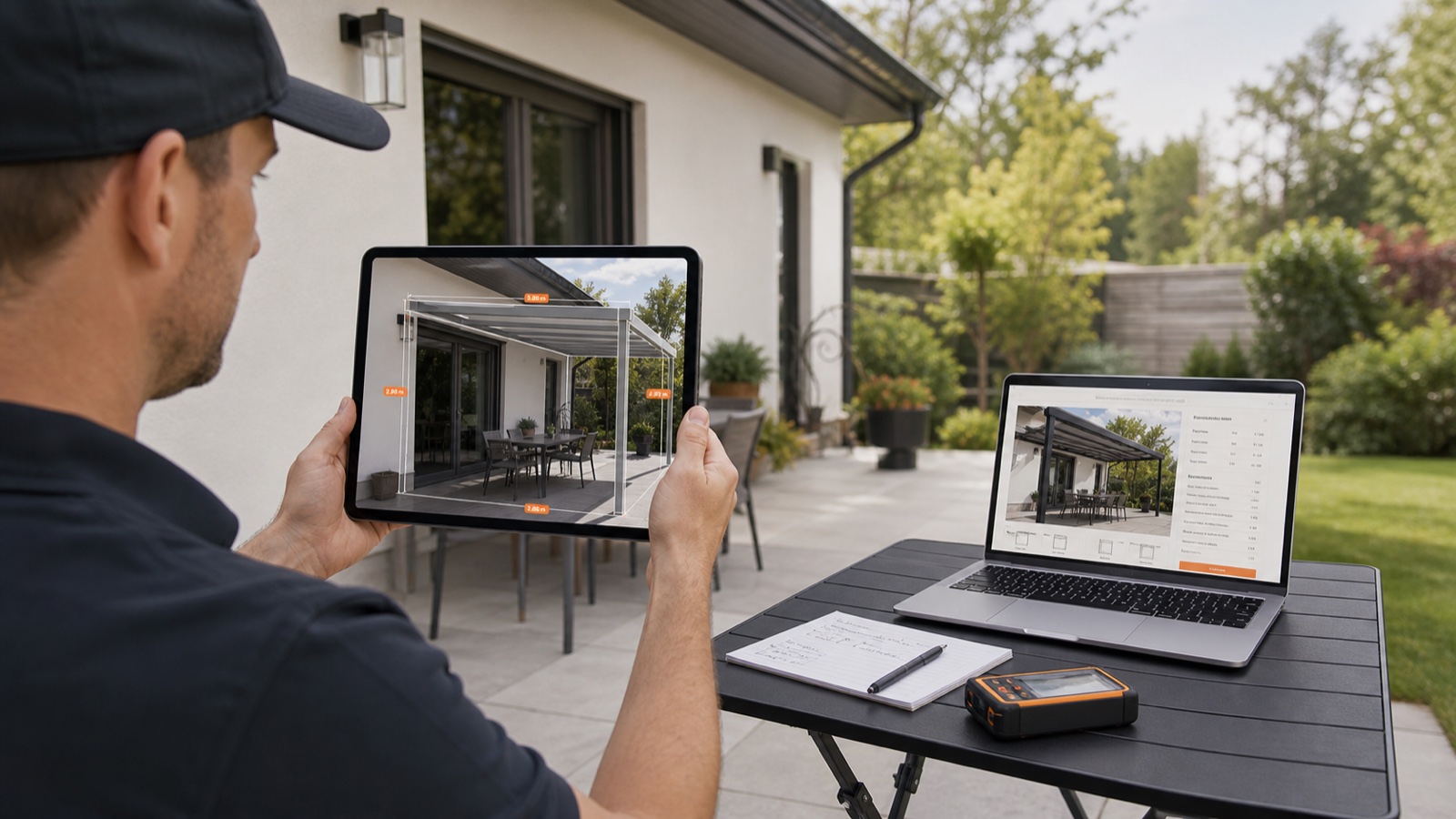
Table of contents
- Why AR site capture is the missing link for outdoor-shade sales
- The core components of a photo-to-install workflow
- How the flow works in practice (step-by-step)
- Practical benefits installers see (and why they matter)
- Table: Manual workflow vs AR site-capture + Configurix workflow
- Implementation checklist — what installers should prepare
- Common technical FAQs
- Where Configurix fits (concrete capabilities)
- Quick ROI example (qualitative)
- Getting started: pilot in 6 weeks
- Final checklist before you roll out company-wide
- Take the next step
- Sources
Why AR site capture is the missing link for outdoor-shade sales
For pergola, veranda, awning and outdoor AC installers, the gap between a lead and a clean install is almost always a site-information problem: measurements, roof/soil conditions, obstructions and customer expectations. Collecting that information by repeated site visits creates delays, rework and lost margin.
A tight AR site-capture → configurator → quote → signed contract → scheduled-install workflow turns a single customer interaction (a quick phone call or a photo) into a field-ready order without extra trips. The payoff goes beyond speed: interactive 3D and AR increase buyer confidence and lower return / dispute risk. Industry data shows 3D/AR product experiences deliver notable lifts in engagement and conversion. (changelog.shopify.com)
The core components of a photo-to-install workflow
Successful implementations stitch five capabilities together into a single, traceable flow:
- AR site capture: the customer or installer takes photos (or uses a mobile AR scan) that tag position, scale and orientation of the home and installation area.
- Real-time 3D configurator: a parametric engine builds a visual, priced model instantly from site inputs.
- Automatic pricing & BOM: rules-based pricing creates factory-ready parts lists and immediate totals as options change.
- Digital contract & signatures: the customer signs the branded proposal online; signature retention and identity assurance meet e-sign laws and guidance. (fdic.gov)
- Scheduling and field dispatch: the system pushes the job into a shared calendar, assigns crews, and tracks status from deposit to close.
Each capability reduces a specific failure mode in a legacy sales process (missed dimensions, wrong parts, unsigned contracts, poor crew coordination). The big win is that these capabilities become a single repeatable customer journey rather than separate handoffs.
How the flow works in practice (step-by-step)
- Lead capture: the homeowner clicks a website widget or replies to an SMS to request a quote. The dealer asks for 2–3 photos (one wide, one close-up, one showing house context) or launches an in-app AR scan.
- Auto-site analysis: the AR capture extracts scale and orientation, and the configurator auto-populates key dimensions and likely mounting options.
- Instant 3D model & price: the configurator renders the product in context (on the customer’s house) and shows live pricing and options so the customer can explore upgrades.
- Branded PDF quote & contract: the system generates a branded, print-ready quote with line-item pricing, installation notes and the required deposit.
- Digital signing: the homeowner e-signs via a compliant flow (e-sign laws and identity guidance apply). (fdic.gov)
- Schedule & dispatch: confirmed orders create calendar events, allocate crews and attach site photos, permits and notes.
- Install & closeout: crews upload photos and completion documents to the project timeline; the customer receives a final invoice and warranty pack.
Practical benefits installers see (and why they matter)
- Fewer site visits — one accurate visit or none. That reduces travel cost and speeds conversion.
- Fewer configuration errors — parametric rules remove impossible option combinations and generate factory-ready specs.
- Faster cash flow — instant branded PDFs and immediate e-signing shrink the time to deposit.
- Better customer experience — seeing the product on their own home (AR) increases confidence and reduces cancellations. (adobe.com)
- Reliable scheduling — centralized calendars and attached site data lower the chance of crew surprises and rework caused by missing information. (mdpi.com)
Table: Manual workflow vs AR site-capture + Configurix workflow
| Problem / Step | Manual (typical) | AR site-capture + Configurix approach |
|---|---|---|
| Initial measuring | In-person site visit(s), manual notes | Customer photos / AR scan auto-populate dimensions; installer verifies if needed |
| Quoting | Offline estimate, later rework for errors | Real-time 3D quote with automatic pricing and BOM |
| Presenting options | Printed or separate PDFs, slow updates | Interactive 3D + AR preview in customer’s real space |
| Signing & legal | Paper or generic PDFs, slow turnaround | Branded quotes + digital contract signing (ESIGN-compliant) (fdic.gov) |
| Scheduling | Phone / spreadsheet dispatch, missed info | Shared calendar, assigned crews, site docs & photos attached |
Implementation checklist — what installers should prepare
- Standardize the minimum photo set you’ll accept (wide context, mounting area, obstructions).
- Build configurator rules from your build process (clearances, profiles, foundation needs, wind/snow ratings).
- Publish pricing rules (labor rates, regional modifiers, optional extras) so the system can calculate instantly.
- Decide the e-sign workflow and retention policy — follow ESIGN requirements and NIST guidance for identity/authentication where needed. (fdic.gov)
- Train crews to upload completion photos and use the project timeline for warranty documentation.
Common technical FAQs
Q: Are photos reliable enough for a permit-ready install?
A: Photos + AR scale work well for initial quoting and many installs. Critical or code-sensitive jobs should be validated with a site visit and explicit verification steps built into the configurator rules.
Q: Will AR and 3D reduce disputes after installation?
A: Yes — when customers view an accurate AR model of the installed product and sign a branded PDF that includes the AR screenshot, expectations match reality. Research shows telepresence from AR raises perceived value and behavioral intent, which supports better post-sale satisfaction. (pmc.ncbi.nlm.nih.gov)
Q: Is a digital signature legally binding in the U.S.?
A: Electronic signatures are generally valid under the ESIGN Act when the consumer consents and the provider preserves the record. Implementations should follow identity and retention best practices (see NIST digital-identity guidance). (fdic.gov)
Where Configurix fits (concrete capabilities)
Configurix is built to run this exact flow for outdoor-shade and HVAC teams. Key Configurix differentiators that matter during implementation:
- Real-time 3D engine that renders parametric pergola, veranda, awning and AC options instantly in the customer’s scene.
- AR preview that places the configured product on the homeowner’s real house via mobile — so buyers can verify scale and looks before signing.
- White‑labeling: branded quotes, PDFs and a white-label portal so manufacturers and dealer networks present consistent branding.
- Instant branded-PDF quoting with full line-item BOMs suitable for factory and field teams.
- Built-in CRM, shared calendar and project timeline so leads move directly to scheduled installs in one system.
- Digital contract signing and secure storage to meet ESIGN and identity-guidance requirements.
If you sell pergolas, try the Pergola Configurator. For awnings and verandas, Configurix supports tailored rulesets — see Awning and Veranda configurator pages. For climate-control attachments choose the AC Configurator. Learn about the company on the home page.
Quick ROI example (qualitative)
- Sales team: reduced follow-up visits and faster proposal acceptance.
- Operations: fewer BOM errors passed to the factory; fewer change orders on-site.
- Customers: more confidence from AR previews and faster contracting.
Many installers report that combining AR previews with instant, priced PDFs cuts time-to-deposit from days to hours — and shortens the overall lead-to-install cycle. For high-season products (summer patios, holiday installs) that speed can be the difference between a booked slot and a missed opportunity. Industry reporting also shows 3D/AR adoption meaningfully improves add-to-cart and purchase likelihood — an indicator that customers who can visualize something in-situ decide faster. (changelog.shopify.com)
Getting started: pilot in 6 weeks
- Define three representative product SKUs (e.g., a basic pergola, a mid-range awning, and an AC mount kit).
- Create simple photo-capture instructions and a validation checklist for installers.
- Configure pricing rules and two labor-rate profiles (urban/rural).
- Run 20 live leads through the flow, capture time-to-quote and time-to-sign, then iterate.
A focused pilot highlights the specific pain points your business will fix — and gives measurable wins to expand across the dealer network.
Final checklist before you roll out company-wide
- Confirm configurator rules match factory requirements and generate a BOM.
- Ensure AR capture instructions are clear and easy for customers to follow.
- Validate the e-sign workflow against ESIGN requirements and your record-retention policy. (fdic.gov)
- Train office staff and crews on the shared calendar and project timeline.
Take the next step
If you want to stop losing time to follow-up visits and rework, the fastest path is a pilot that connects AR site capture to a rules-driven, real-time 3D configurator with branded quotes and scheduling. Configurix was built for outdoor-shade teams and provides the exact building blocks above — AR preview, automatic pricing, white-label PDFs, digital signing and a lead-to-install CRM all in one place.
Explore the Pergola Configurator or request a walkthrough on the home page.
Sources
Shopify Changelog — "Shop adds 3D and augmented reality (AR) previews" (2022).
Adobe — "Adobe 3D Trends" (2023).
Heliyon / PMC — "The effects of augmented reality on consumer responses in mobile shopping" (Jungmin Yoo, 2023).
Buildings (MDPI) — "Construction Delays Due to Weather in Cold Regions" (2025).
FDIC / U.S. government guidance — "Electronic Signatures in Global and National Commerce Act (ESIGN)" (summary; 2000).
NIST — "SP 800-63 Digital Identity Guidelines" (NIST, guidance updated through 2025).
Ready to try Configurix?
See how the configurator, quoting and CRM work together for your business.
Book a demo →Related articles
Permit-Ready Quotes for Pergolas & Awnings - Checklist for Verandas
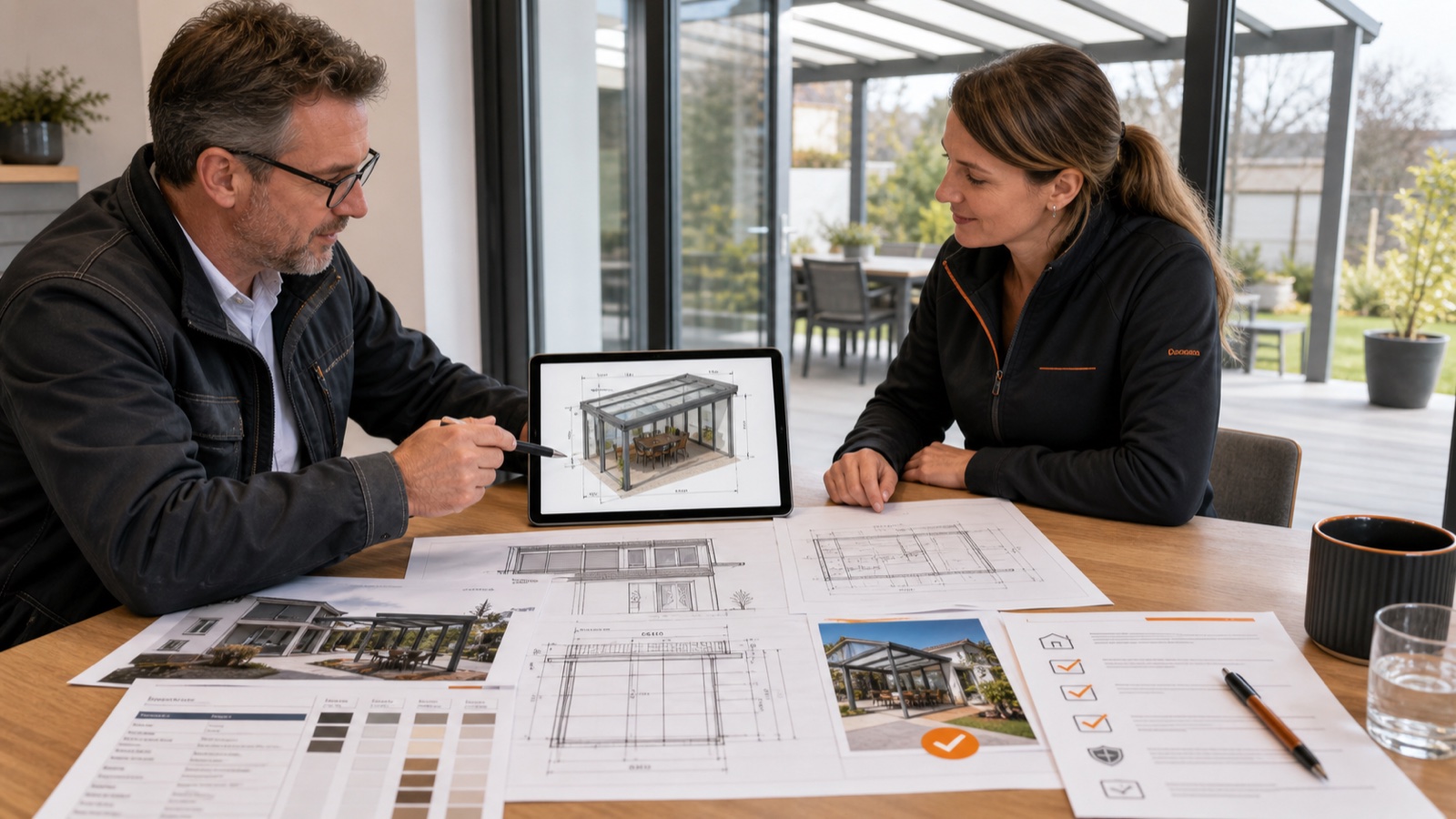
A practical, permit-focused checklist for installers: what drawings, measurements and documents to include in a quote so permits pass first time. Use 3D, AR and branded PDFs to make quotes inspection-ready.
From Configurator Lead to Scheduled Install: 7-Step Workflow
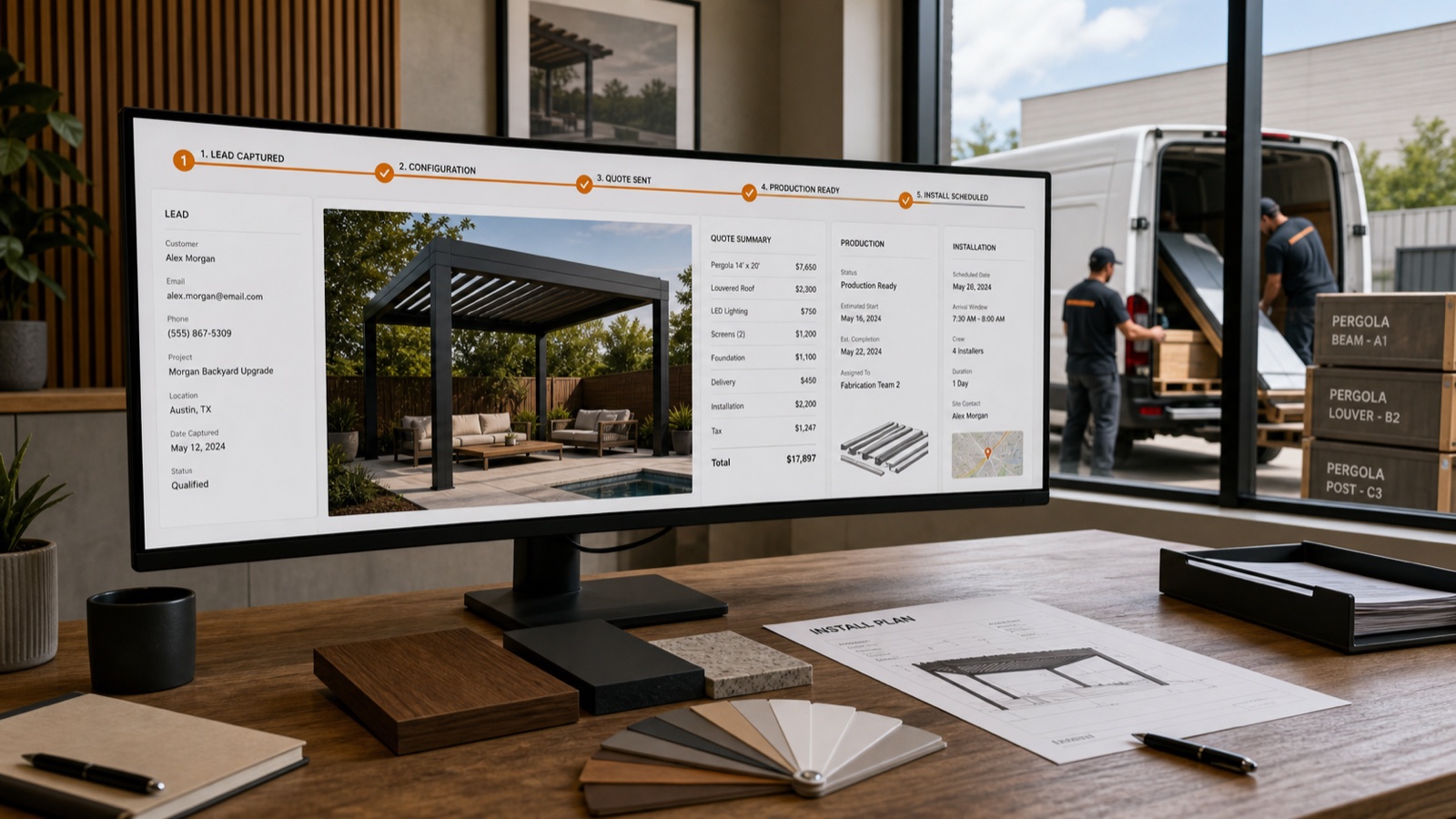
A practical 7-step pipeline for pergola, veranda and awning installers: capture configurator leads, use AR & real-time 3D to qualify, auto-generate branded quotes, get signed contracts and schedule installs — all in one system.
How Manufacturers Scale Pergola & Awning Distribution with a White‑Label 3D Configurator
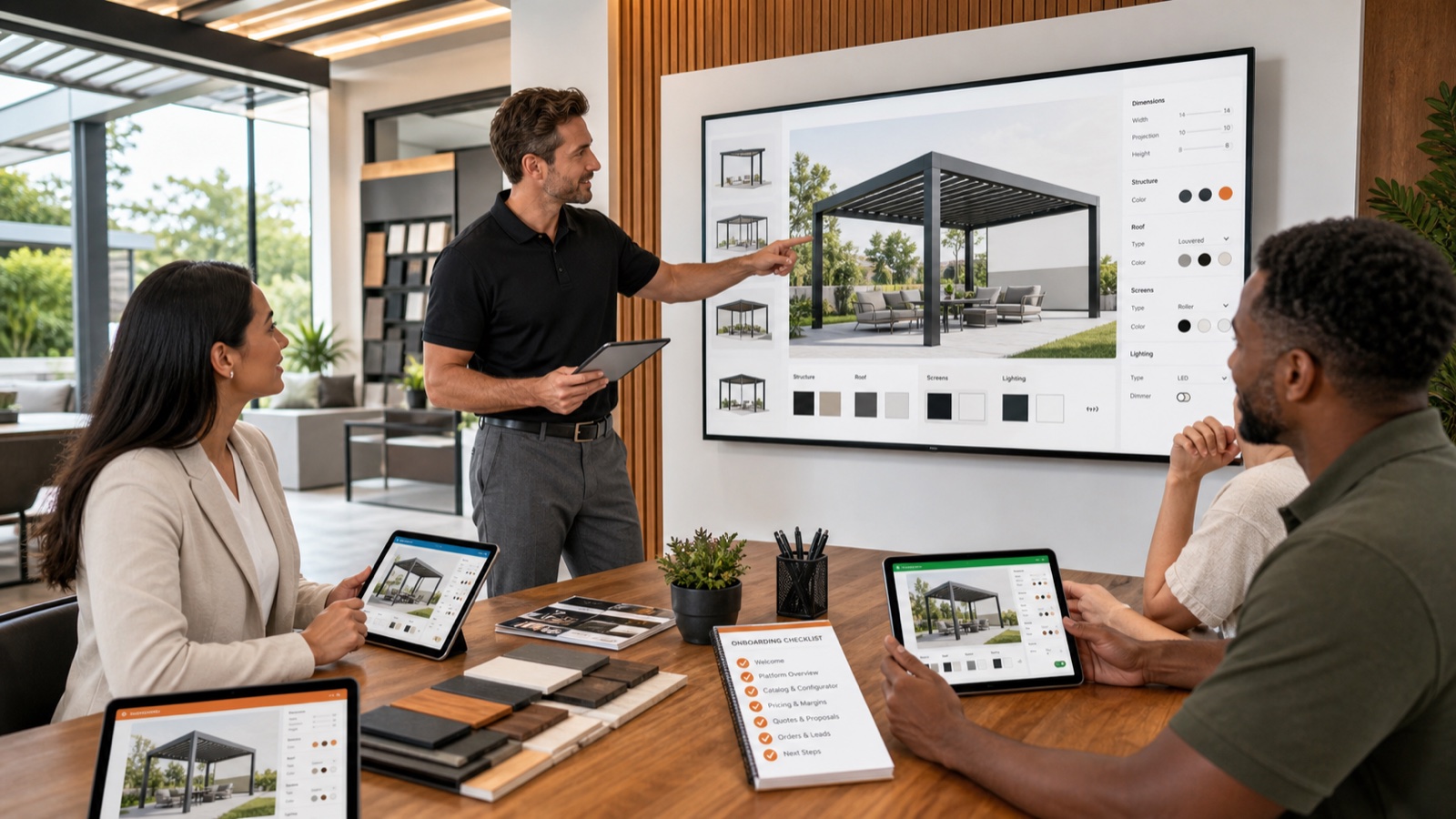
A step-by-step guide for manufacturers to roll out a white‑label 3D/AR configurator, standardize pricing, and onboard dealers fast — from catalog publishing to signed orders and install scheduling.
Cut Field Rework for Pergolas: Real-Time 3D, AR & Instant Branded Quotes
Reduce costly site rework and lost margin on pergola, veranda and awning installs using a single Configurix workflow: real-time 3D rules, AR on the home, instant branded PDFs and signed contracts.